
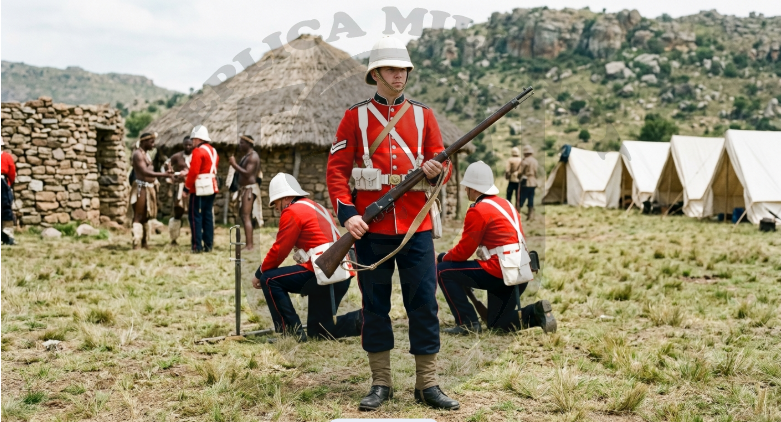
The 1879 Anglo-Zulu War remains one of the most iconic conflicts of the Victorian era. From the heroic defense at Rorke’s Drift to the fateful battle at Isandlwana, the image of the British infantryman in his stark red coat standing against overwhelming numbers is etched deep into military history. For living historians and living history groups, crafting a historically accurate British Zulu War uniform requires an uncompromising eye for detail, authentic materials, and precise tailoring.
Whether you are stepping out with the 24th Regiment of Foot or building a Victorian officer’s kit, this guide details every component required to achieve a true-to-history Zulu War reenactment impression.
Key Anatomy of the 1879 British Infantryman’s Uniform
During the Zulu campaign, British redcoats wore the classic Home Service-style dress adapted for field conditions under the hot South African sun. To build an accurate Victorian military reproduction, your kit must center around these core pieces:
- M1871 Scarlet Wool Infantry Tunic: The famous “Red Coat.” Tailored from heavy scarlet wool, featuring blue facing velvet on the collar and cuffs, white piped edging, and Victorian crown brass buttons.
- M1871 Dark Blue / Foreign Service Trousers: Heavy wool trousers featuring a distinct red side-stripe down each leg.
- 1877 Pattern Foreign Service Helmet (Pith Helmet): Made from cork and covered in white or stained-khaki canvas, featuring a leather chin strap and brass rear hook.
- Black Leather Gaiters & Ammo Boots: Ankle-high black leather ammo boots paired with dark leather gaiters wrapped around the lower leg to protect against harsh veld thorns.
Explore our hand-stitched, period-correct Victorian and British Zulu War Uniforms to get museum-quality tunics tailored to your exact measurements.
M1871 Valise Equipment Webbing & Field Gear
A redcoat’s uniform is incomplete without the iconic white leather accoutrements. The 1871 Pattern Valise Equipment system defined the silhouette of the British soldier in South Africa:
| Gear Piece | Historical Detail & Function |
| White Buff Leather Belt & Frog | Features the brass Victorian Queen’s Crown buckle and bayonet frog for the Martini-Henry bayonet. |
| M1871 Ammunition Pouches | Twin white buff leather pouches worn on the front, designed to hold 20 rounds of .577/450 Martini-Henry cartridges each. |
| Black Leather Valise (Pack) | Carried on the upper back to hold personal kit, spare shirt, and rations. |
| Oliver Pattern Canteen | Wooden or tin canteen wrapped in blue felt with a leather shoulder strap. |
Looking for a complete outfit ready for field duty? View our complete Victorian Zulu War Infantry Combo Set for an all-in-one tailored package.
Reenactor Tips for Field Authenticity
- Weathering the Scarlet Tunic: Historical photos and accounts show that original scarlet tunics quickly gathered dust and mud in South Africa. Light field aging gives your kit a campaign-hardened look.
- Staining the Pith Helmet: Many British units stained their bright white Foreign Service helmets with tea, coffee, or local mud to reduce visibility to Zulu marksmen.
- Proper Leather Maintenance: White buff leather requires pipeclay application to maintain its crisp, brilliant finish during parade or living history demonstrations.
Exploring other eras of British military history? Read our comprehensive breakdown on WW1 British Army Uniforms & Puttees or inspect our detailed guide to WW2 RAF Officer Tunics & Flight Gear.
Frequently Asked Questions (FAQ)
Q1: Why did British soldiers wear red coats during the Zulu War?
The scarlet tunic was the standard dress for British line infantry regiments in 1879. While practical khaki was being adopted in India, British forces in South Africa still wore classic scarlet tunics.
Q2: What fabric should a reproduction 1879 Zulu War tunic be made from?
An authentic reproduction must be crafted from high-grade 100% heavy scarlet wool with wool felt or velvet facings, brass hardware, and cotton lining to match original archival garments.
Q3: Did British soldiers stain their white pith helmets during the Zulu War?
Yes. Due to the high visibility of white cork helmets on the open veld, many officers and enlisted men used tea, coffee, or local soil to dye their helmets khaki in the field.
Q4: What rifle and bayonet accoutrements are correct for an 1879 impression?
Reenactors should carry white buff leather M1871 pattern pouches and a brass-clasp belt paired with a socket bayonet frog designed for the .577/450 Martini-Henry rifle.
Q5: How do I choose the correct sizing for a Victorian military tunic reproduction?
Victorian tunics were tailored to fit snugly across the chest and waist to maintain a sharp military posture. It is recommended to select bespoke or custom-tailored options using exact chest, waist, and sleeve measurements.