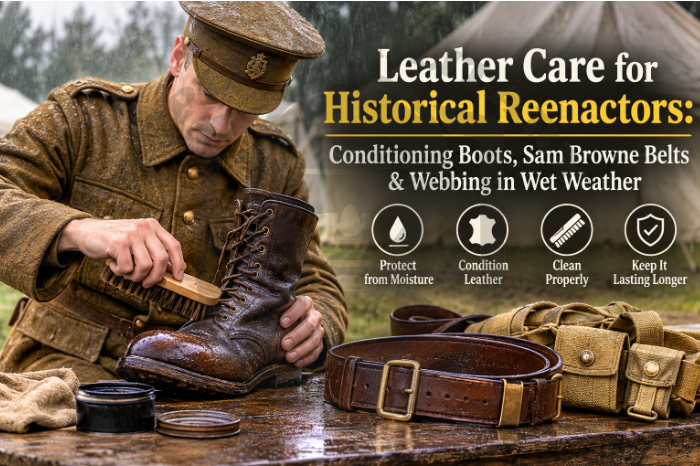
A wet-weather living-history event can leave even a carefully assembled impression looking tired. Mud settles into boot seams, rain darkens leather, and damp straps can stiffen as they dry. For historical reenactors, the challenge is not simply making leather look clean again—it is preserving its shape, finish and character without compromising the period appearance.
Whether you wear reproduction WW1 ammunition boots, a British officer’s Sam Browne belt or leather accessories alongside canvas field equipment, a thoughtful maintenance routine helps your kit remain presentable and ready for the next parade, display or field weekend.
The golden rule is simple: clean gently, let leather dry naturally, and use conditioner sparingly. Always check the material and maker’s care guidance first. Reproduction leather can vary in finish, tanning and construction, so a treatment that works on one item may stain, soften or darken another.
Why wet weather is hard on historical leather gear
Leather is a natural material. It absorbs and releases moisture, and repeated cycles of soaking and rapid drying can leave it stiff, misshapen or more prone to surface cracking. Mud and grit can also act like abrasives when rubbed into the grain. Metal fittings, stitching and adjoining fabric components introduce further points that need attention.
Rain does not automatically ruin leather. The greater risk often comes from what happens afterwards: placing boots beside a heater, storing a damp belt in a sealed bag, applying too much oil, or scrubbing grit across the surface. A calm, repeatable after-event routine is more useful than an aggressive rescue treatment.
1. What to do immediately after a wet-weather event
1. Remove loose mud first. Let thick mud become less wet, then lift it gently with a soft brush or dry cloth. Avoid scraping with a knife or stiff wire brush.
2. Wipe away surface dirt. Use a clean, barely damp cloth where needed. Do not soak the leather or saturate seams, stitching and edges.
3. Open up the kit. Unlace boots, remove insoles if designed to come out, and separate detachable straps or accessories so air can circulate.
4. Blot excess moisture. Press a dry absorbent cloth against wet areas. Do not wring, twist or aggressively rub leather.
5. Air-dry slowly. Leave items in a ventilated room at normal indoor temperature, away from direct sunlight, radiators, fires and hot-air guns.
If an item is heavily saturated, misshapen, or has valuable historical, hand-finished or delicate details, seek advice from a leather conservator or experienced leatherworker before attempting restoration.
2. How to care for leather reenactment boots
Boots take the hardest treatment in the field. They meet wet ground, grit, mud and repeated flexing, so build a short cleaning routine into your post-event pack-down. Replica Military’s reproduction British Army World War One ammunition boots are listed in black pebble leather, with a leather sole and selectable colour options. Check the product details and any supplied care instructions before applying a product.
View WW1 British ammunition boots
Once the boots are dry to the touch:
· Brush away remaining dry dirt with a soft, non-abrasive brush.
· Wipe the upper with a slightly damp cloth if needed, then allow it to dry fully.
· Use a leather conditioner only if the leather appears dry and the manufacturer confirms it is suitable for that finish.
· Test any cream, wax or conditioner on a small, hidden area first. Allow the test patch to dry and check for darkening, colour transfer or a change in sheen.
· Apply a very thin, even layer. More product is not better; heavy application can leave a greasy surface and alter the appearance.
· Keep soles, hobnails, stitching and hardware free from unnecessary conditioner or polish.
Avoid soaking boots to soften them, machine washing, household oils, petroleum jelly, silicone sprays and untested waterproofing products. These can affect colour, breathability, grip, stitching or future repair. If you need weather resistance, choose a product specifically approved for the leather type and finish.
3. Conditioning a Sam Browne belt without changing its character
A Sam Browne belt is a prominent part of many British officer impressions. The waist belt, shoulder straps and attached equipment are exposed to rain, sweat, friction and repeated buckling. Care should preserve the belt’s structure and finish rather than making it unnaturally soft or glossy.
Explore Replica Military’s WW1 British officers Sam Browne belt with double shoulder strap
After exposure to rain, wipe away surface moisture and dirt with a soft cloth. Lay the belt flat or support it in its natural shape while it dries. Do not hang a saturated belt by one narrow point, as the weight of wet leather may encourage stretching. Keep shoulder straps relaxed and avoid sharp folds.
When fully dry, inspect the leather around buckle holes, strap joins, stitching and attachment points. These are common stress areas. If the leather looks dry, test a small amount of a compatible conditioner in a discreet area. Use the minimum amount needed and keep it away from metal fittings.
Do not saturate the belt with oil in an attempt to make it supple. Excess oil can darken leather, weaken the intended finish, attract dirt and affect the way straps hold their shape. If a belt has become stiff, cracked or distorted, consult a leather specialist rather than forcing it back into shape.
4. Looking after leather webbing, pouches and field accessories
Historical field equipment may combine leather with canvas, cotton webbing, metal hardware and stitching. Treat each material according to its needs. Do not assume that a leather-care product is suitable for an entire assembled piece.
For leather pouches, frogs, holsters and straps, remove loose dirt with a soft brush and wipe the surface carefully. Empty the item before drying so moisture is not trapped inside. Keep flaps open where practical, but do not force them beyond their natural range. Dry components separately only when designed to detach.
For canvas or woven webbing, use a separate, material-appropriate cleaning method. Avoid leather conditioner, wax or oil on textile straps unless the maker specifically recommends it. These products may leave marks, change colour or attract dust. Keep metal fittings dry and check for corrosion once the equipment has aired.
Browse leather articles and boots or view leather slings and belts to explore the leather equipment range.
5. How often should reenactors condition leather?
There is no universal calendar schedule. Conditioning depends on leather type, finish, frequency of use, storage conditions and the product maker’s instructions. Conditioning too often can be as unhelpful as neglecting dry leather.
· After every wet event: remove mud and surface moisture, then air-dry completely.
· Before storage: check that the item is fully dry and free from dirt. Do not condition automatically if the leather still feels supple and looks healthy.
· During seasonal checks: inspect for stiffness, surface dryness, cracking, loose stitching and corrosion around fittings.
· Before a major event: test any new treatment well in advance, not on the morning of the reenactment.
For museum pieces, original antiques or rare items, avoid routine home conditioning. Consult a qualified conservator; conservation priorities can differ from maintenance of modern reproduction gear.
6. Common leather-care mistakes to avoid
· Drying beside direct heat: Fast drying can cause leather to stiffen, shrink or distort. Use gentle airflow at room temperature.
· Applying too much oil or conditioner: Over-conditioning can darken leather, leave residue and change its handling or appearance.
· Using one product on every material: Leather, canvas, cotton webbing and metal fittings need different care.
· Packing gear away while damp: Trapped moisture encourages musty odours, mildew and corrosion on nearby hardware.
· Scrubbing mud while it is gritty: Abrasive particles can scratch or wear the surface. Lift dirt gently.
· Ignoring stitching and stress points: Check seams, buckle holes, strap joins and attachment loops before the next event.
7. A practical wet-weather leather-care kit
A small maintenance kit can prevent rushed cleaning after an event. Consider carrying:
· Two clean, lint-free cloths (one for wiping and one for blotting).
· A soft brush for dry mud and dust.
· Absorbent paper or clean boot-shaping inserts, if suitable for your footwear.
· A breathable storage bag for transport after items have dried.
· A leather-care product approved for the specific leather finish, used only when needed.
· A separate cloth for metal fittings and a small inspection checklist.
Keep cleaning products labelled and separate from uniform textiles. If travelling home with wet gear, use a temporary ventilated arrangement and finish drying as soon as practical; do not leave damp leather sealed in a plastic bag or vehicle boot for extended periods.
8. Build a complete impression with gear you can maintain
A convincing historical impression depends on the relationship between clothing, footwear and equipment. Boots should suit the period and unit; belts and pouches should match the intended pattern; and webbing should sit correctly with the rest of the kit. Maintenance helps preserve the look, but choosing the right equipment at the start matters just as much.
Explore WW1 British Army uniforms and equipment for coordinated uniform and field-gear options. You can also read the complete WW1 reenactment uniform guide for help assembling a period impression.
Replica Military offers reproduction uniforms and equipment for reenactors, collectors, museums and productions, including leather accessories and historical boots. If sourcing a specific pattern or building a coordinated kit, review the relevant product details and contact the team with reference photographs, period, measurements and requirements.
Conclusion: protect the leather, preserve the impression
Wet-weather care does not need to be complicated. Remove mud gently, blot moisture, let leather dry slowly, inspect stress points and condition only when the material needs it—and only with a product suited to its finish. Keep leather care separate from canvas and webbing maintenance, and treat antiques or delicate pieces with specialist guidance.
With a consistent routine, your boots, Sam Browne belt and field accessories can remain ready for the next living-history event while retaining the character that makes a historical impression convincing.
Frequently asked questions
How do you dry leather reenactment boots after rain?
Remove loose dirt, blot excess moisture with a clean cloth, open the boots and let them air-dry at room temperature in a ventilated space. Keep them away from radiators, fires, direct sunlight and hairdryers. Use boot supports only if suitable for the boot and avoid forcing the shape.
Should I condition leather boots after every reenactment?
No. Clean and dry them after each event, but condition only when the leather appears dry and the manufacturer confirms the product is suitable. Over-conditioning can darken leather and leave a greasy residue.
Can I use the same conditioner on a Sam Browne belt and military boots?
Not automatically. Leather finishes and construction can differ. Check the maker’s guidance, test any product on a hidden area and use a product approved for each item’s leather type.
How do I stop a Sam Browne belt from becoming stiff after rain?
Blot moisture, support the belt in its natural shape and allow it to dry slowly. Once completely dry, assess whether it actually needs a compatible conditioner. Do not soak it in oil or force stiff straps into position.
Can leather conditioner be used on canvas webbing?
Generally, no. Conditioner intended for leather may stain or alter canvas and woven webbing. Clean textile components separately using care instructions appropriate to their material.
What is the best way to store leather military equipment between events?
Store it only when fully dry and clean, in a cool, dry, ventilated place away from direct sunlight and heat. Avoid sealed plastic bags and heavy items resting on straps or shaped leather components.
Can I use waterproofing spray on reproduction military leather?
Only if the maker confirms it is compatible with the leather and finish. Test it discreetly first because some sprays can change colour, sheen or surface feel.
How should I care for antique or original military leather?
Do not assume modern conditioners are safe for antiques. Consult a qualified leather conservator, especially if the item is rare, fragile, cracked, historically significant or has original markings.