
Introduction to WW1 Military Clothing UK
The First World War fundamentally transformed both geopolitics and military attire. For British soldiers, their WW1 military clothing UK reflected complex evolving strategies, technologies, and the distinctive challenges presented by trench warfare. Tracing the history and impacts of these garments illuminates profound narratives derived from their service.
Development Of British Military Dress Before WW1
British uniforms during world war one were spawned frim victorian and edwardian eras. British military seemed to love vanity, as they sported red tunics which did create a dazzling impression but was not practical in combat as it had gleaming buttons serving no purpose besides showoff along with ornamental headgears to complete the look.
Transition From Scarlet To Service Dress
Red coats had served well in ceremonial parades but offered no advantage in combat against modern arms like rifles and machine guns. Inadequate for frontline warfare, they underscored the need for effective disguise—prompting the adoption of more suitable khaki wool provided by the Service Dress system deployed in 1902, a foundational shift in the development of WW1 military clothing UK.
Importance of Khaki in Camouflage and Morale
The duller shades of khaki not only concealed soldiers, but it was more challenging for the enemy to spot. Soldiers reported that khaki material, while coarse, preserved warmth as well as endurance when worn in cold damp trenches.
The Cut and Material of Service Dress Uniforms
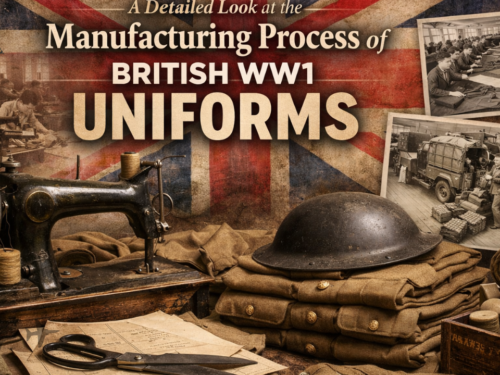
Though functional and practical, the military clothing issued to soldiers from the UK during WW1 was made with wool serge. The design of the tunic has a rather generous range although it does allow movement in contrast to looking smart. It had good sized pockets while collars were stiff, and puttees at the lower legs were wrapped tightly around the calves.
Explore Our Uniform
British uniforms of World War 1 | Replica Military
Key Elements of WW1 Military Clothing UK
Understanding some key elements help us to appreciate WW1 military clothing UK better through headgear which included hobnail boots. Each item was shaped by harsh environmental conditions combined with unyielding military logic available placed a demand on them.
Brodie Helmet
The steel Brodie helmet was first issued to British troops in 1915 and became associated with British uniforms throughout World War 1. Its relatively shallow profile would sometimes be considered a disadvantage since shrapnel in trench warfare would get deflected at an angle above—still providing protection it lacked before. Unlike soft caps that predated it, this offered essential protection for all ranks enabling its widespread adoption.
Tunics and Trousers
The five-button tunic worn by soldiers was made of khaki, which marked an advancement in combat clothing. It had reinforced seams, pleated breast pockets, and shoulder epaulettes for rank insignia. The high-waisted trousers were loose-fitting to allow movement, while puttees tightly wrapped around the legs below the calf to prevent mud from getting in.
Trench Coats and Greatcoats
UK units relied on thick wool greatcoats for warmth during winter months. These garments were long and double-breasted with large collars that could be turned up to protect against wind and rain. Officers often wore lighter trench coats which were tailored with waterproof linings and belt cinches.
A Soldier’s Outfitting: Usefulness Above Uniforms
Readiness for combat during the World War I period involved far more than just a uniform. For British soldiers, standardized outfitting was designed for maximum efficiency in rigorous conditions.
Boots And Footwear
All branches of the British Army received ankle boots with hobnails issued to them. Prolonged wet exposure was a concern for these boots so they had to be durable.H3: Webbing and Ammunition Carriers
Incorporated in the WW1 military clothing UK issued was the 1908 Pattern Web Equipment which included straps and pouches worn over the tunic used for holding ammunition, bayonets, water bottles, and even rations. The weight carried was distributed strategically to ensure balance while maintaining essential gear.
Gas Masks and Respirators
By 1915, the use of gas hand warfare evolved into a persistent threat. Soldiers were provided with increasingly sophisticated gas masks starting from simple cotton pads soaked with anti-gas chemicals to the box respirator. Such devices became fundamental components of British uniforms throughout World War One, as they were expected to be carried at all times.
Officer Uniforms vs. Enlisted Men’s Gear
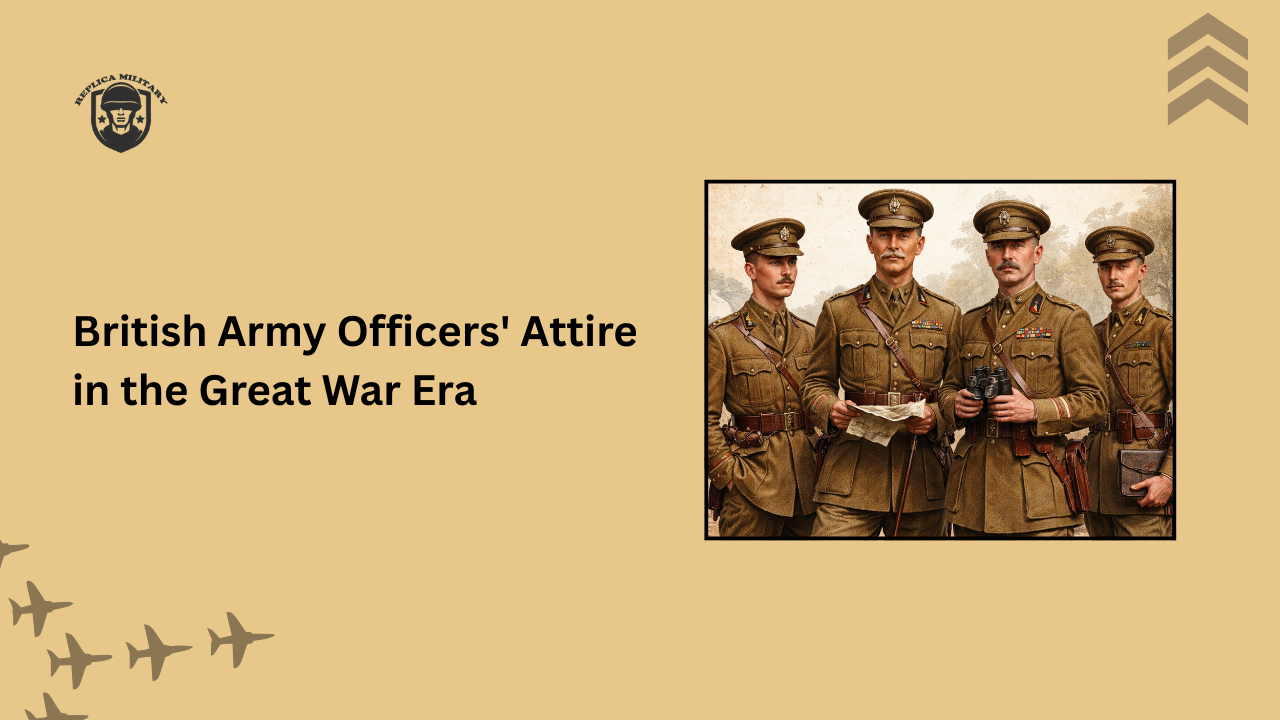
The basic remained color khaki but officer uniforms incorporated distinct features that highlighted differing ranks along with lines of responsibilities specially tailored for each structure within the unit.
Higher Quality Materials and Tailoring
With such expectation came higher standards where officers had to purchase their own uniforms leading to better grade materials such as fabric along with hand-sewn seams and bespoke tailoring. Integration of riding breeches was standard alongside leather Sam Browne belts and mounted polished boots for commissioned ranks.
Rank Markers and Insignias
One of the most important aspects of WW1 military clothing UK for the hierarchy structured in visible insignia. Officers marked their rank with pips and crowns on their shoulders, while non-commissioned officers (NCOs) sported chevrons on their sleeves. These symbols greatly aided identification, but at times made personnel vulnerable to danger.
Differentiation by Headwear
Caps and hats differed even though Brodie helmets were common among soldiers. Enlisted men progressed from soft field service caps to steel helmets, while officers kept their peaked service caps. The former maintained a sharper look compared to the rest of the troops.
Explore Our Uniform
British uniforms of World War 1 | Replica Military
Final Remarks
Necessity, innovation, and identity driven evolution makes the journey of WW1 military clothing UK intriguing. Every stitch tells a distinct story about adaptability and resilience—from bright ceremonial coloriles during war-time to practicality inspired camouflage uniforms.
British World War 1 uniforms served as more than protective garments; they were vital components needed for survival across battlefields traversing in service arms through out history. Soldiers donned woolen tunics accompanied by steel helmets and gas masks adorned with webbing not only embraced militaristic aesthetics but finding peace amidst chaos redefined in combat during modern warfare primitives came alive throughout Europe’s landscape filled with trenches deep enough capturing lifelines.
Present remnants of WW1 military clothing UK use is observable in British ceremonial attire as well as in reenactments, illustrating a profound link to history. This legacy is preserved by museums and collectors who, together with participants of heritage events, honor the contribution and sacrifice of those who wore these uniforms so that they are never forgotten.